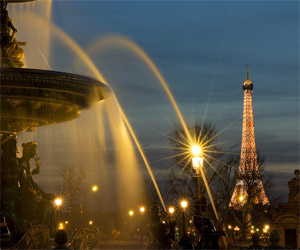
The Eiffel Tower was built by Gustave Eiffel as a
temporary monument for the World's Fair of 1889. Just few days after it was
completed it became the most famous landmark of the city receiving the visit of
2 millions people the first year. Today after more than 120 years it remains
tourits' favorite attraction and welcomes about 6 millions visitors a year.
Please find here below details about history, opening hours, tickets price
and tips...
Shows tickets & guided city tours
Enjoy a romantic dinner cruise on the Seine River,
visit the Eiffel Tower with a guide, get tickets for Paris best cabaret shows.
See:Paris city tours
History
The story of the Eiffel Tower started in June 1884 when
the plan was conceived by Gustave Eiffel to build a huge iron tower for the
World's Fair of 1889. The construction began in 1887 and took a little more than
2 years... Depsite the "Protest against the Tower of Monsieur Eiffel" published
in a newspaper and signed by several big names - including Charles Gounod, Guy
de Maupassant, Alexandre Dumas junior and Sully Prudhomme - success was
immediate and just a few days after it was completed it became the most famous
landmark of the city receiving the visit of 2 millions people the first year.
Visit the Eiffel Tower: Tips, tickets price and opening hours
Practical and useful information to plan a visit
to the Eiffel Tower
Our tips for visiting the Eiffel Tower
Our tips: The "iron lady" is the most
famous landmark of the city so expect to queue quite a long time if you arrive
in the afternoon of for sunset... If visiting during winter take a warm coat,
gloves and scarf. Good to know: The main queue is for the elevators not
for the stairs... If you feel fit enough to go through the 600 steps and if you
don't have vertigo, stairs are the best way to reach the second level where the
view is absolutely breathtaking. The highest level (The third one) can only be
reached by elevator but the view is not much better than from second level...
The only great plus of the very top is the Champagne bar to enjoy a glass of
Champagne admiring the view.
The Eiffel Tower Night Show
Don't miss the Eiffel Tower night show... The Eiffel Tower
will sparkle each hour for ten minutes, from dusk until 2am (1am in winter).
Our romantic tip: If visiting Paris at summertime buy a cold bottle of
champagne and share a glass sitting on the grass of the "Champs de Mars" waiting
for the night to come and the iron lady to sparkle...
Entrance tickets price & opening hours
Tickets price: Lift to 2nd floor €8,20 -
Lift to the top: €13,4 - Stairs to 2nd floor €4,70. *Tickets prices are indicative only (As shown on official
website - Sep 2011). From mid June to end of August: Open every day from 9 am to
midnight. Rest of the year: Open every day 9:30 am to 11 pm.
Restaurants
The Eiffel Tower hosts two restaurants and a Champagne
bar. Eiffel 58 restaurant: Restaurant is located on the 1st floor.
Don't expect anything exceptional here ... However food is honnest and
view is great. Open every day Lunch is served from de 11.30am to 4:pm and dinner
from 6.30pm to 11pm - Phone: 01 72 76 18 46. Jules Verne restaurant:
One of Paris most talked about table... The restaurant is located at the 2nd
floor and is rated 1 Michelin star. A great place to eat. Reservations are
mandatory. Lunch is served from 12.15pm to 13.30pm and dinner from 7pm to
9.30pm. Phone: 01 45 55 61 44
Champagne Bar: Bar is located at the very top of the Eiffel Tower. It is
open 12am-10pm. The glass of Champagne cost between €10 and €15.
 Français